
A small leak found early is a maintenance task. The same leak found the next morning can mean damaged ceilings, ruined equipment and disrupted tenants. Wireless leak sensors make it practical to watch vulnerable locations around the clock.
The main design choice is whether to watch a single point or a whole zone. This note explains when to use a compact point sensor, when a sensing cable is the better choice, and how to make sure an alert leads to action.
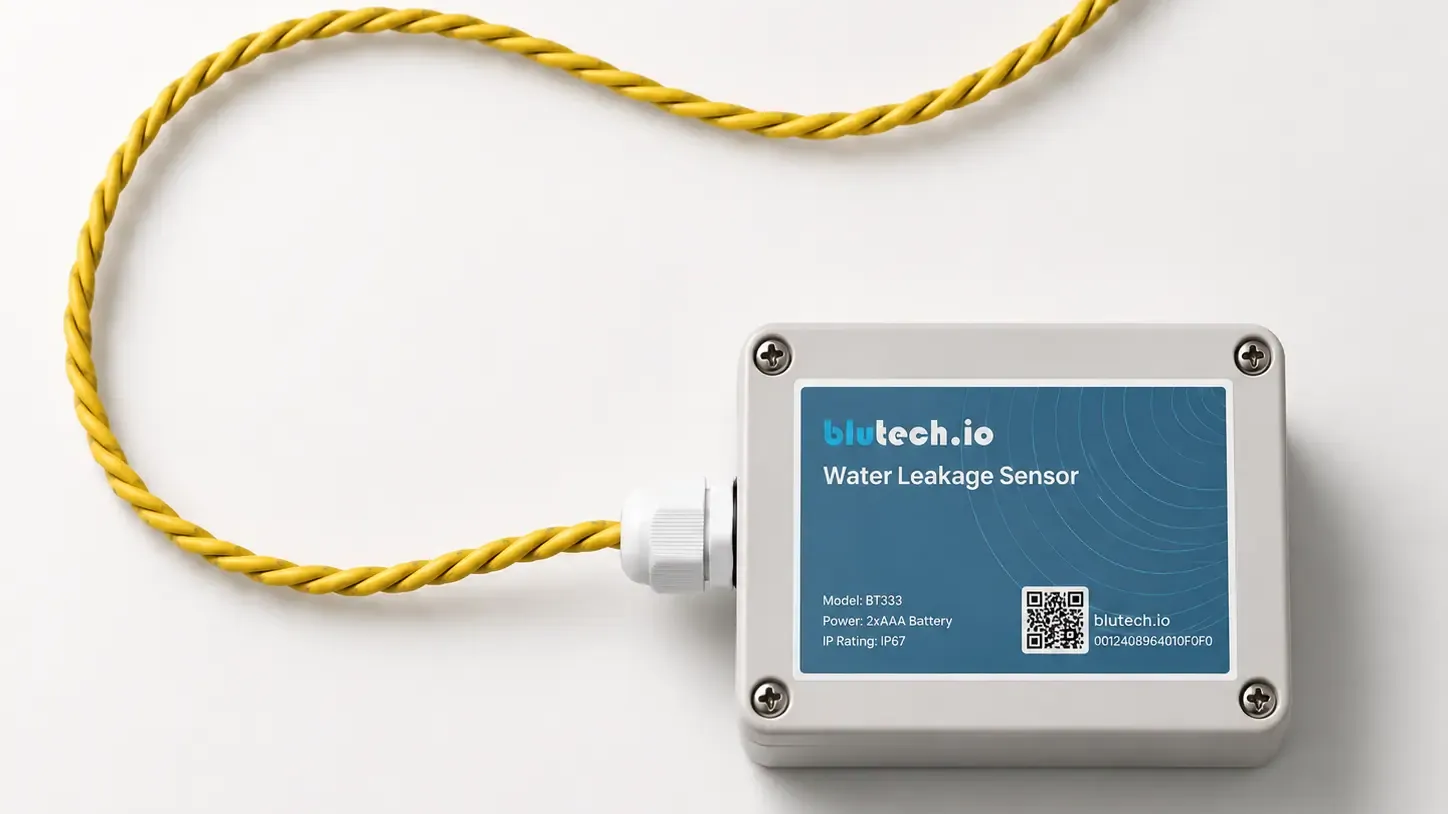
Point detection
A compact point sensor detects water at one spot. It suits places where the likely source of a leak is known:
- Under valves, water heaters, pumps and filters.
- Beside air-conditioning units and condensate drains.
- Under sinks and in washroom service voids.
- Small rooms where water collects at one low point.
Point sensors are discreet and quick to install, but they only detect water that actually reaches them.
Cable detection
A sensing cable detects water anywhere along its length. It suits:
- The perimeter of plant rooms, server rooms and switch rooms.
- Long runs of pipework, or along walls.
- Raised floors and areas where water could appear at many points.
A cable tells you that water is present somewhere along its run. It does not show the exact position unless the product specifically supports location sensing, so keep each zone small enough to search quickly.
Choosing between them
- Known leak source in a small area: a point sensor.
- Unknown leak position, a larger area or a perimeter: a sensing cable.
- Critical rooms: often both, with cable around the perimeter and point sensors at key equipment.
- Areas that are washed down: choose positions and alert delays carefully to avoid false alarms.
Installation affects detection
Water follows the floor, not the drawing. Place sensors at the real low point, check floor falls and drains, and keep cables in contact with the floor along their whole route.
Protect cables from foot traffic and cleaning equipment, and label each zone so that responders know exactly where to look.
Connect alerts to a response
An alarm that only beeps in an empty plant room helps nobody. Send leak events to the people who can act, with the building, floor, room and zone, and agree:
- Who responds during and outside office hours.
- Whether a local alarm or an automatic valve shut-off is needed.
- How each event is acknowledged and closed.
- What is recorded for insurance and maintenance purposes.
Keep the system healthy
Leak sensors may stay dry for years, so their health has to be monitored. Track each device's reporting and battery, test sensors with water at planned intervals, and review the alert history to spot recurring causes such as condensation or cleaning routines.